Top 5 Mistakes Companies Make When Entering the Turkish Market
Super Admin5 دقائق قراءة
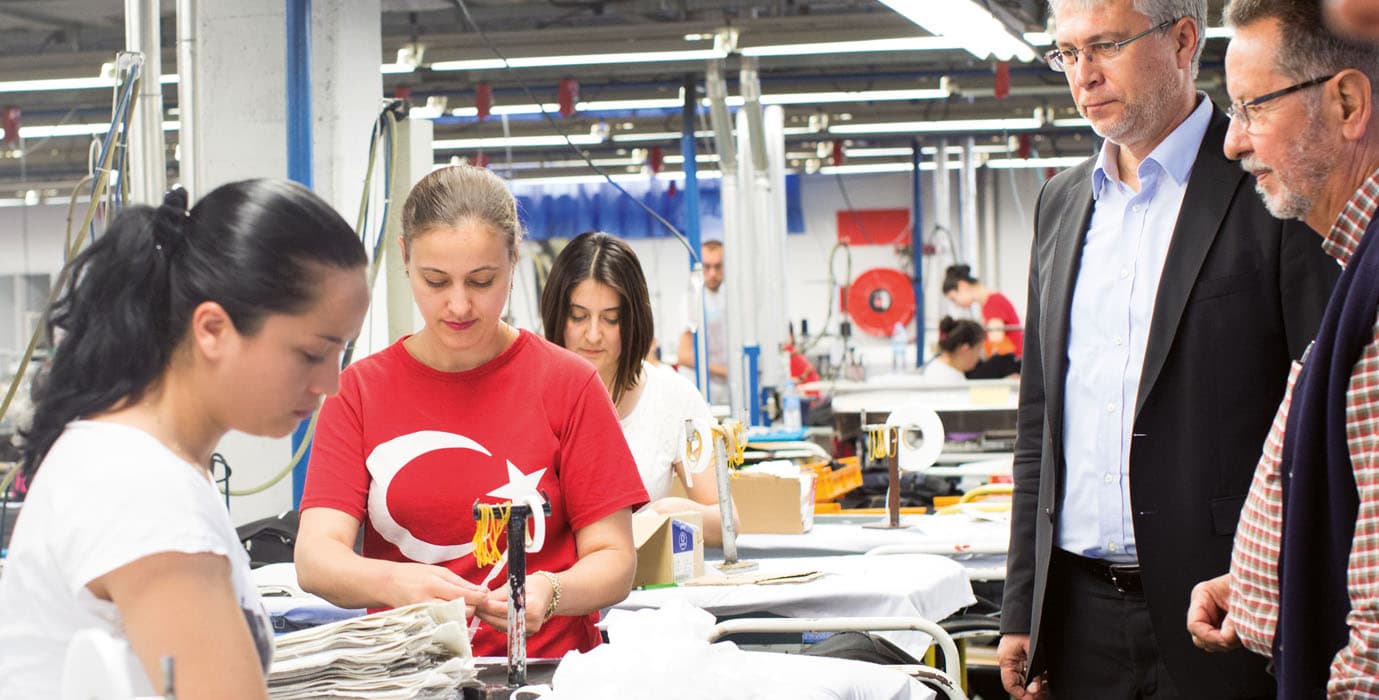
Turkey has become an increasingly attractive market for international companies looking to source products, establish supplier relationships, develop partnerships, or expand their business presence.
Its strategic location, strong manufacturing base, competitive production costs, and access to European, Middle Eastern, and regional markets create significant opportunities.
But entering a new market is not simply about finding a supplier and negotiating a price.
Many international companies make avoidable mistakes during their first interactions with the Turkish market. These mistakes can lead to delayed projects, unexpected costs, quality problems, or unreliable supplier relationships.
Here are five of the most common ones.
1. Making Decisions Too Quickly
One of the most common mistakes is moving from the first supplier contact directly to a commercial agreement.
A supplier may appear professional, offer an attractive quotation, and respond quickly—but this does not necessarily mean that the company is the right partner.
Before making a commitment, companies should understand:
The supplier's actual production capabilities
Experience with international customers
Minimum order quantities
Production and delivery capacity
Quality-control procedures
Certifications and their scope
Export experience
Payment conditions
Lead times
After-sales support
A few days of additional due diligence can prevent months of problems later.
The objective should not be to find the fastest supplier. It should be to find the right supplier.
2. Choosing Suppliers Based Only on Price
Price is obviously important in procurement—but it should never be the only selection criterion.
Two suppliers may provide apparently similar quotations while offering very different levels of quality, production capacity, documentation, communication, packaging, delivery reliability, and technical support.
A lower initial price can also become more expensive when hidden costs appear through:
Quality issues + rejected batches + delays + additional logistics + rework + communication problems
For this reason, international buyers should evaluate the total procurement cost, rather than simply comparing the price per unit.
A strong supplier should provide the right balance between:
Price + Quality + Capacity + Compliance + Reliability + Communication
3. Failing to Verify the Supplier
This is one of the most serious mistakes a company can make.
Before entering into a significant commercial relationship, buyers should verify that the supplier actually exists, operates legally, and has the capabilities it claims to have.
Depending on the nature of the business, due diligence may include checking:
MERSİS information
Tax information
Company registration details
Relevant certifications
Production facility
Manufacturing capacity
Product specifications
COA and MSDS documentation where applicable
Export history
Customer references
Physical factory location
Ownership and company information
More importantly, documents alone are not always enough.
A supplier may possess valid certifications while still being unsuitable for a particular project because of insufficient capacity, unsuitable equipment, inconsistent quality, or lack of experience with the required product.
Supplier verification should therefore combine documentary verification with practical capability assessment.
4. Underestimating Cultural and Communication Differences
International business relationships can fail even when the product and price are both suitable.
Why?
Because successful procurement depends heavily on communication.
Differences in business culture, negotiation style, technical terminology, response expectations, and commercial practices can create misunderstandings between buyers and suppliers.
This becomes particularly important when discussions involve:
Product specifications
Quality requirements
Payment terms
Delivery schedules
Packaging
Contract conditions
Certifications
Changes to the original order
Clear communication in the appropriate language can significantly reduce these risks.
For companies working between Turkey, Europe, and the Middle East, having communication capability across Turkish, English, and Arabic can be a significant practical advantage.
5. Entering the Market Without a Trusted Local Representative
Perhaps the most underestimated challenge is the absence of someone who understands the local market and can act on the buyer's behalf.
A company sitting thousands of kilometres away from its supplier may struggle to know what is actually happening on the ground.
A local representative can provide:
Local supplier research → Factory communication → Price negotiation → Documentation checks → Sample coordination → Production follow-up → Quality communication → Export coordination
This can give international buyers better visibility throughout the procurement process.
It also creates an important advantage during negotiations.
When the buyer understands the supplier, the local market, and the realistic alternatives available, the negotiation becomes based on market knowledge rather than the supplier's first quotation.
The Good News: These Risks Can Be Reduced
Entering the Turkish market does not have to be complicated.
The key is to treat supplier selection as a due-diligence process, rather than simply a search for the lowest quotation.
A structured approach can help companies move from:
Unverified supplier → Verified manufacturer
Unclear quotation → Transparent commercial offer
Remote communication → Local market support
Procurement uncertainty → Informed decision-making
The right local partner can make this process considerably easier.
Why Having a Local Sourcing Partner Matters
For international companies that do not have an established team in Turkey, working with a local sourcing and market-entry partner can provide access to knowledge that is difficult to obtain remotely.
Instead of simply providing a list of companies, the partner should help evaluate which suppliers are actually suitable for the buyer's requirements.
This includes supplier identification, factory verification, documentation review, communication, negotiation, sampling, and ongoing coordination.
TurkLink Global: Your Local Partner in Turkey
For companies looking to enter the Turkish market or establish reliable supplier relationships, TurkLink Global provides local sourcing and procurement support designed to connect international buyers with suitable Turkish manufacturers and official source suppliers.
The focus is not simply on finding a supplier.
It is on helping companies identify, verify, evaluate, and communicate with the right supplier before making an important commercial decision.
From supplier research and factory assessments to documentation review, negotiation, sampling, and export coordination, TurkLink Global helps international companies navigate the Turkish market with greater transparency and confidence.
The Turkish market offers significant opportunities. The key is knowing how to approach it.
Before signing the contract, sending the payment, or placing the first large order, make sure you have answered one fundamental question:
Do you really know who you are doing business with?


